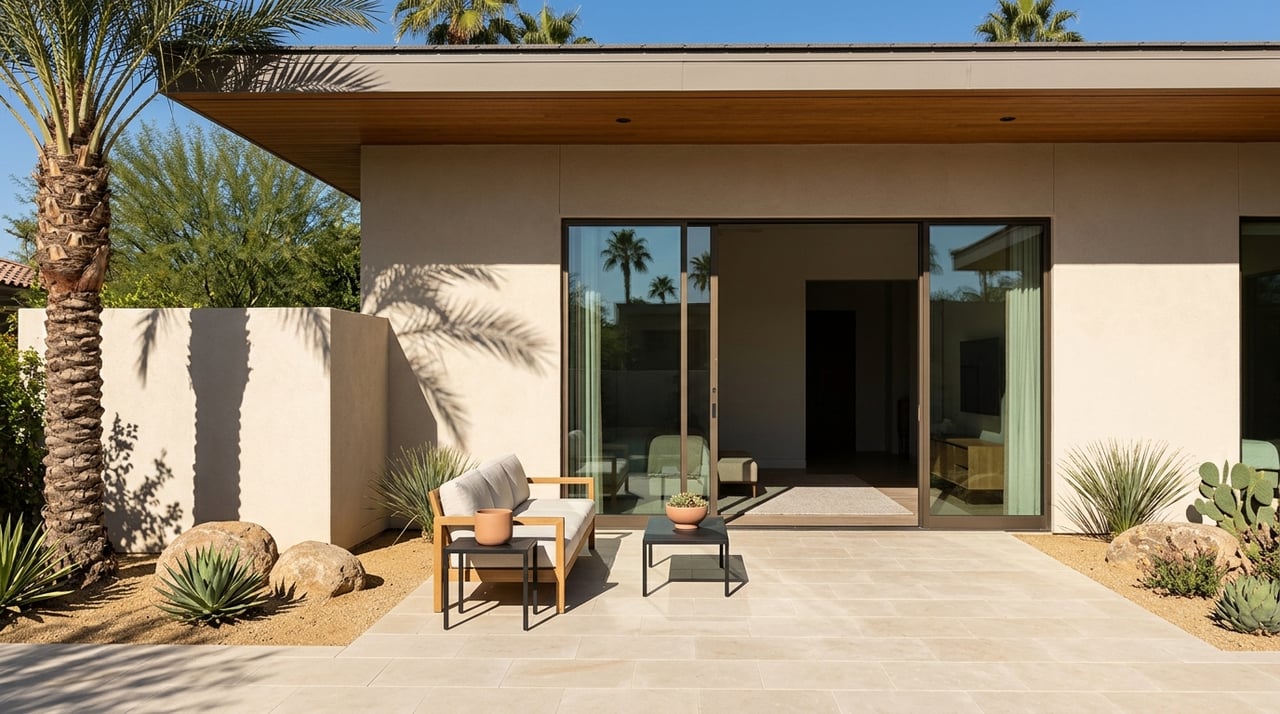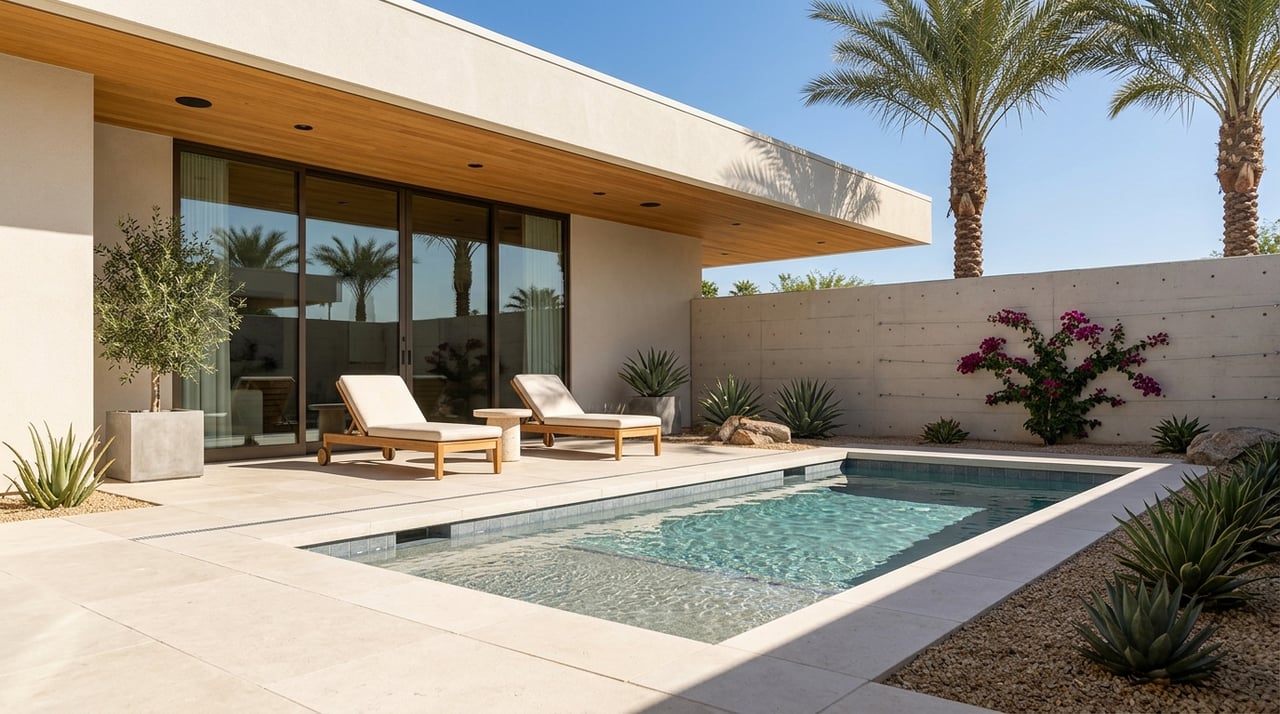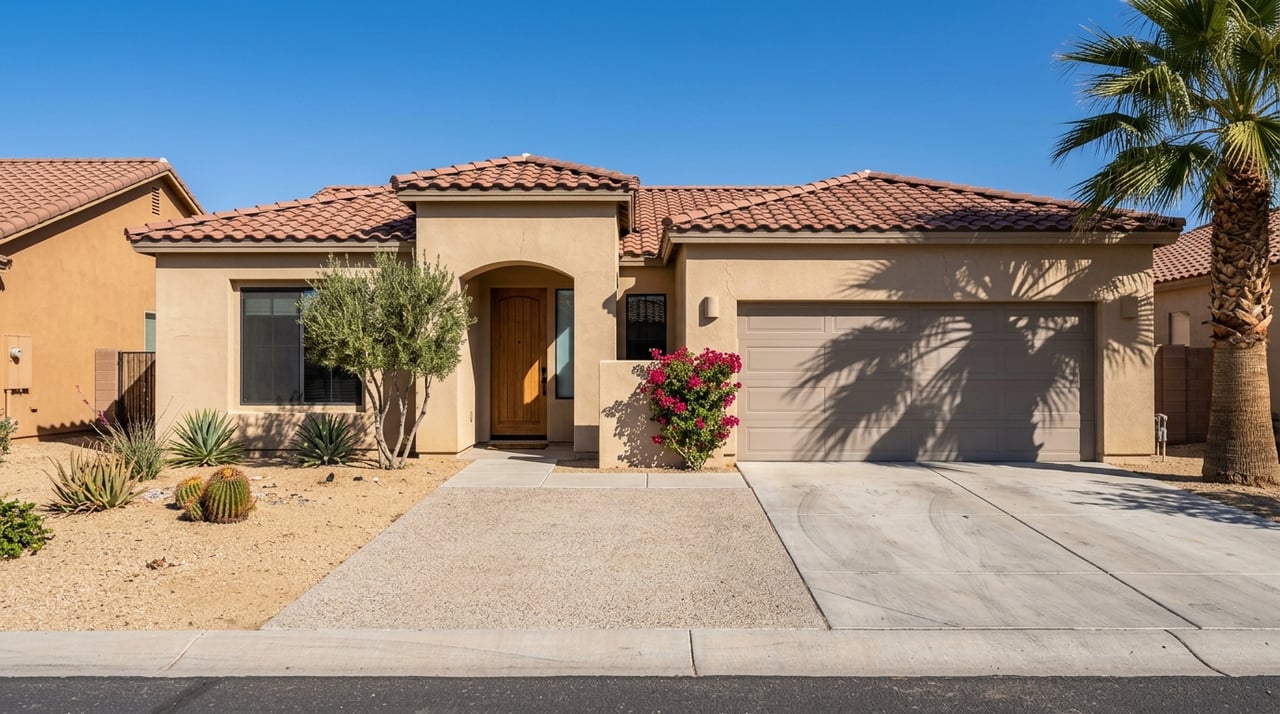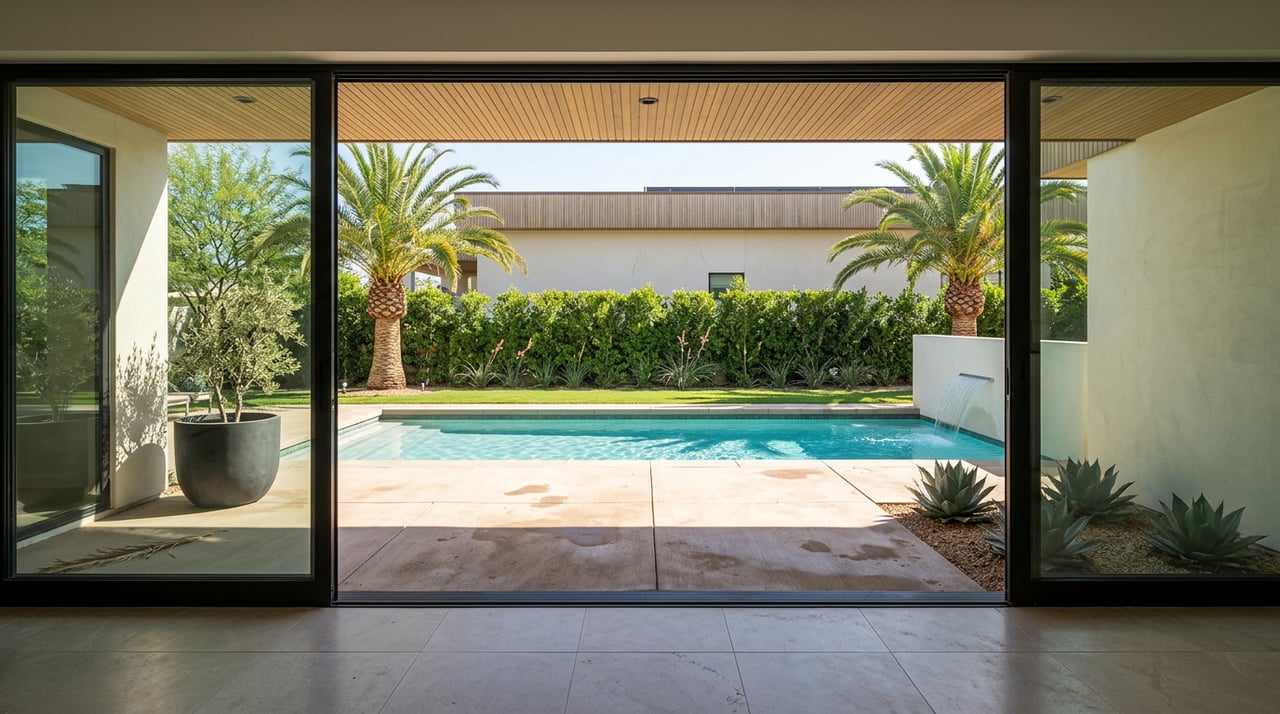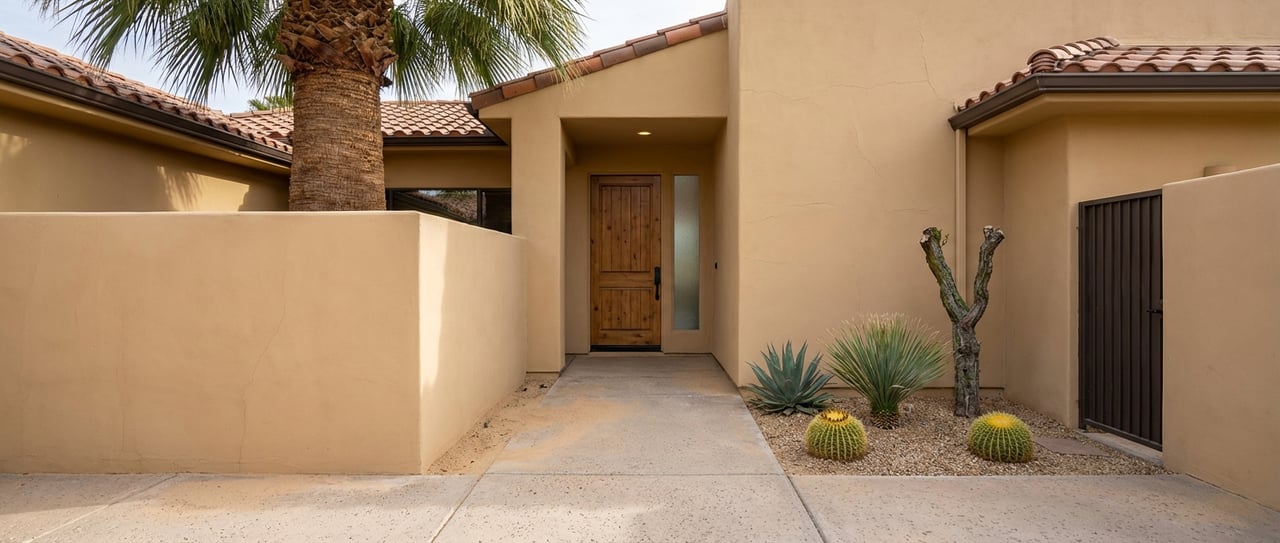
Thinking about trading your current home for a low-maintenance condo in Palm Desert? You’re not alone. Many longtime owners and seasonal residents are choosing simpler living that keeps the desert lifestyle front and center. In this guide, you’ll learn what to expect from different condo and townhome options, how HOA rules and costs really work, what lenders look for, how Prop 19 can help with property taxes, and what to know if you plan to rent seasonally. Let’s dive in.
Why downsize in Palm Desert now
Palm Desert offers a wide range of condos and townhomes across price points. Recent market snapshots show a mid six-figure median sale price citywide, with one source reporting about $635,000 in January 2026 and another estimating a typical value closer to $544,010. Days on market often hover around 70 to 80 days, but that varies by neighborhood and property type. The big takeaway for you: pricing and pace are very community specific, so unit-level data matters more than citywide medians.
If you want a lock-and-leave base with resort amenities, you’ll find many choices. If you prefer a quiet garden complex with modest dues, those exist too. Your best fit comes down to lifestyle, budget, and how much you want the HOA to handle.
Condo and townhome options
Garden and low-rise condos
These are attached, often single-level units with 1 to 2 bedrooms. Typical sizes range from about 600 to 1,400 square feet. Expect community pools and landscaped common areas, with generally lower monthly dues. If you value simplicity and minimal upkeep, this is a strong match.
Townhomes and fee-land attached units
Townhomes often offer more space, multi-level layouts, and private garages. You’ll commonly see 1,300 to 1,800-plus square feet with small patios or yards. Dues can land in the low-to-mid hundreds per month, depending on amenities and what the HOA maintains. This option suits you if you want condo convenience with a bit more elbow room.
Golf-course and country-club communities
These developments highlight amenities like clubhouses, multiple pools, tennis and pickleball, fitness centers, and guard gates. Monthly dues are usually higher because they support extensive facilities and, in some communities, social or fitness memberships. If you want an active, resort-like environment with services bundled into one payment, this category is worth exploring.
Active-adult and 55-plus communities
Age-restricted neighborhoods focus on social programs, clubs, and accessible design. The HOA rules and amenities reflect that lifestyle. If you want a built-in calendar and the convenience of on-site activities, start here.
Typical floorplans in Palm Desert
- 1 bedroom, 1 bath: about 600 to 900 square feet.
- 2 bedrooms, 2 baths: about 1,000 to 1,400 square feet.
- 3 bedrooms or larger townhomes: about 1,300 to 1,800-plus square feet.
Match lifestyle to property type
- Minimal maintenance and easy travel: smaller garden condos or managed townhomes.
- Social life and organized activities: 55-plus communities or amenity-rich country clubs.
- Seasonal lock-and-leave with security: gated complexes or guard-gated communities.
HOA costs and documents you must review
In California, buying in a condo or townhome community means your purchase is part of a common-interest development. Sellers must provide a statutory resale disclosure package that outlines the association’s rules and financials. The requirements are set by the Davis-Stirling Act, including Civil Code Section 4525, which lists what must be delivered to you as a buyer. Review this packet carefully to avoid surprises. You can read the legal framework in California Civil Code Section 4525.
What the resale packet tells you
You’ll receive details on current monthly dues and any special assessments, plus whether the seller has unpaid balances or fines. The packet includes the most recent budget and a reserve study summary, which explain how well the HOA is funded for major projects. It also includes governing documents like CC&Rs, bylaws, and community rules, along with recent meeting minutes if requested.
Dues, reserves, and special assessments
Monthly dues vary widely based on community size and amenities. Smaller garden complexes often land in the low hundreds. Larger townhome communities can be in the mid hundreds. Amenity-rich country-club communities may exceed $1,000 per month. Focus on reserve funding levels in the budget and reserve study. Strong reserves reduce the chance of large special assessments later. If the minutes or reserve study show a big project coming, you can plan around it or negotiate accordingly. The reserve and assessment disclosures are part of Civil Code Section 4525.
Master insurance and your HO-6 policy
Most associations carry a master insurance policy for common areas and certain building components. As the unit owner, you typically maintain an HO-6 policy to cover interior improvements, personal property, liability, and assessment coverage. Ask the HOA for the master policy summary to learn where the association’s coverage stops so your HO-6 fills the gaps. Insurance disclosures are also included in Civil Code Section 4525.
Order the HOA packet early
Associations have up to 10 days to deliver the resale documents, and they may charge itemized fees. Ordering early helps you avoid delays that can affect contract deadlines. See the delivery and fee rules in Civil Code Section 4530.
Financing condos: project eligibility 101
Condo financing depends not just on your qualifications, but also on the project’s eligibility. Conventional lenders often follow Fannie Mae and Freddie Mac rules that evaluate owner-occupancy ratios, budget and reserves, insurance, litigation, commercial use, and investor concentration. If a community does not meet these standards, it may be considered non-warrantable, which can limit conventional loan options or increase costs. Review the basics in Fannie Mae’s condo and co-op requirements.
FHA and single-unit approvals
If you plan to use FHA or VA financing, confirm the project’s status early. FHA maintains a public lookup for approved condo projects and also allows certain single-unit approvals, which can help when a community lacks a full approval. Check a project’s status using HUD’s FHA condominium lookup.
Actions to take before you write an offer
- Ask your lender to run a project eligibility check for the community.
- If using FHA or VA, verify project approval or single-unit approval pathways.
- If the project is non-warrantable, prepare for a larger down payment, specialty loan options, or adjusted contingencies.
- Align your loan and HOA document review timelines so you can keep contingencies in place until you have answers.
Taxes and timing for 55-plus sellers
If you are selling a longtime primary residence, you may qualify for the federal home-sale exclusion on capital gains, subject to ownership and use tests. This is a common factor when downsizing. Always confirm details with your tax advisor.
California’s Proposition 19 can be a major advantage. If you are 55 or older, severely disabled, or a victim of wildfire or natural disaster, you may be able to transfer your base year property tax value to a replacement home anywhere in California, within program limits. Each county outlines how to file, timing, and forms. For a clear overview of the program and filing guidance, review a county assessor’s Prop 19 page, such as this summary from the Tulare County Assessor on transferring a property tax base for owners 55-plus. Then confirm Riverside County procedures and deadlines before you move forward.
Lock-and-leave living and rentals
A key appeal of Palm Desert condos is the turnkey lifestyle. HOAs often handle exterior maintenance, roof and landscape care, and pool service. Gated access, on-site management, and security patrols are common in amenity-rich developments, which helps if you are a seasonal owner who travels frequently.
If you plan to rent your condo while away, check two layers of rules. First, many HOAs restrict short-term rentals or set minimum lease terms. Second, the City of Palm Desert requires a short-term rental permit and collects an 11 percent Transient Occupancy Tax on stays of 27 nights or less, plus a 1 percent Tourism Business Improvement District assessment in the relevant district. Some platforms may remit the 11 percent tax on your behalf, but you remain responsible for the TBID payment. Review the city’s short-term rental and TOT guidelines before you buy or list your property.
Your downsizing roadmap
Use this checklist to stay organized and avoid expensive surprises.
- Define lifestyle goals. Decide how much space you truly need and which amenities matter most.
- Set a monthly budget. Include mortgage, HOA dues, property taxes, HO-6 insurance, and utilities.
- Pre-check financing. Have your lender review condo project eligibility and any FHA or VA requirements early.
- Preview HOAs. Ask what monthly dues cover, whether there are pending assessments, and how reserves are funded.
- If you are selling first, time disclosures. Order the HOA resale packet at listing so buyers can review without delay. See Civil Code 4530 for delivery timing.
- Confirm insurance. Request the master insurance summary and price your HO-6 policy before removing contingencies. See Civil Code 4525 for required insurance disclosures.
- Plan for taxes. If you are 55-plus, evaluate Proposition 19 transfer benefits and required filings with the county assessor. Start with this Prop 19 overview and confirm Riverside County steps.
- If you intend to rent seasonally, verify both HOA rental rules and the city’s permit, TOT, and TBID obligations. See Palm Desert’s STR and TOT page.
Work with a local advisor
Downsizing is about more than square footage. It is about simplifying your life while keeping the Coachella Valley lifestyle you love. From comparing HOA budgets and reserve studies to confirming project eligibility and Prop 19 timelines, local guidance helps you avoid missteps and make a confident move.
If you are weighing a Palm Desert condo or townhome, let an experienced, neighborhood-focused pro walk you through the options and details. Reach out to Bryan Dearden to schedule a consultation and get a clear plan for your next chapter.
FAQs
What HOA documents should I review when buying a Palm Desert condo?
- Review the resale packet required by California’s Davis-Stirling Act, including assessments, budget and reserve study, CC&Rs and rules, insurance summary, and recent minutes.
How do HOA dues vary across Palm Desert communities?
- Smaller garden complexes often have dues in the low hundreds, townhomes can land in the mid hundreds, and amenity-rich country-club developments may exceed $1,000 per month depending on services.
What does “non-warrantable” mean for a condo loan?
- It means the project does not meet conventional standards for delivery to Fannie Mae or Freddie Mac, which can limit loan options or require larger down payments and specialty financing.
Can I use FHA for a condo purchase in Palm Desert?
- Possibly, if the project is FHA approved or your unit qualifies under FHA’s single-unit approval rules; always confirm using HUD’s condominium lookup and your lender’s guidance.
How can Proposition 19 help me if I am 55-plus?
- If eligible, you may transfer your base year property tax value to a replacement home anywhere in California within program rules; check county assessor instructions and deadlines.
Are short-term rentals allowed in Palm Desert condos?
- Many HOAs restrict short-term rentals, and the City of Palm Desert requires a permit plus 11 percent TOT and a 1 percent TBID in certain areas, so verify both HOA rules and city requirements before renting.